Introduction
A LGPD on websites It is an essential theme for any company or professional that has a digital presence. Since the entry into force of the General Data Protection Law, every online page that collects, stores or processes user information must be in GDPR compliance.
In this article, you will understand what LGPD is, how to apply it on your website, what technical adjustments are necessary and how to maintain compliance personal data protection as a priority. Additionally, we will cover how to structure a privacy policy clear and accessible — an essential factor in building trust and transparency with your visitors.
Table of Contents
🔒 What is LGPD and why is it important for websites
A LGPD (General Data Protection Law) is Brazilian legislation created to regulate the treatment of personal data — whether collected online or offline.
When we talk about LGPD on websites, we are addressing the need to adapt forms, cookies, databases and even sending newsletters to the new digital reality.
The law seeks to ensure that the user has full transparency and control over your information. This means that websites need to clearly explain what they collect, how they use it, and how long they store the data.
👉 Practical example: If your website has a contact form, it is essential to include a checkbox so that the visitor can agree to the use of your data, as well as a direct link to your privacy policy.
⚙️ How to apply LGPD on websites in practice
Apply to LGPD on websites involves technical and organizational actions. See the main steps:
1. Mapping the collected data
List all the points where your website collects information — forms, cookies, analytics, plugins, etc.
This will help identify if there is unnecessary collection of personal data.
2. User Consent
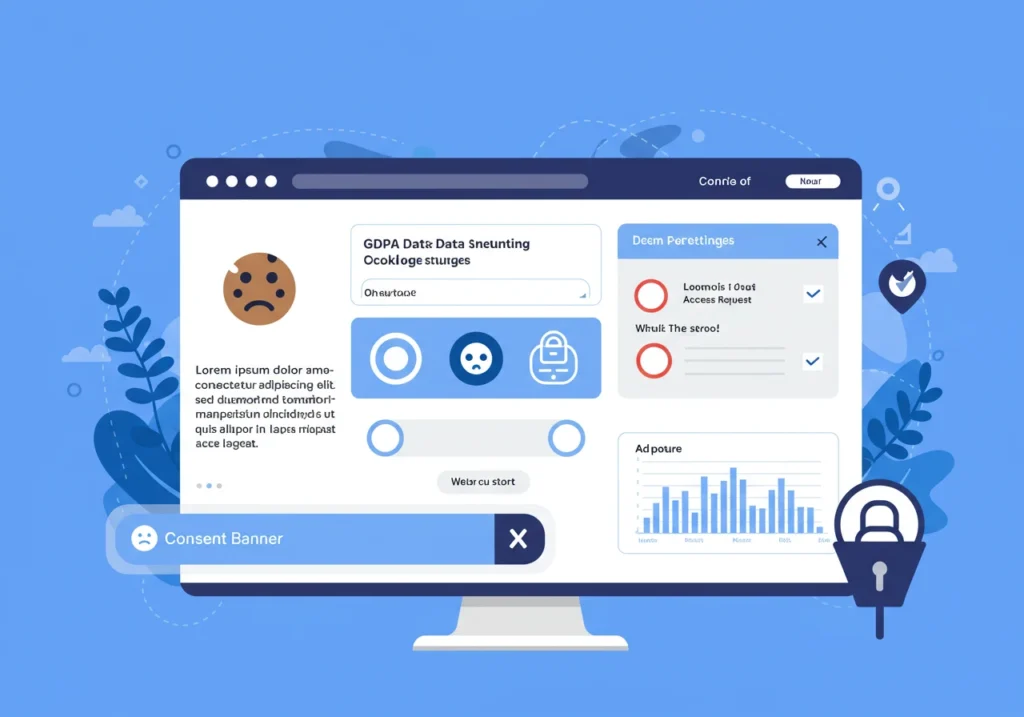
Implement a cookie consent banner, where the visitor can accept, reject or customize their preferences.
Tools like Cookiebot or Complianz facilitate this configuration.
3. Privacy Policy Update
A privacy policy must contain clear information about:
- what data is collected;
- the purpose of use;
- the storage period;
- how the user can request the deletion of data.
🔗 Privacy policy example: Read Agência Render’s privacy policy
📜 Privacy policy and cookie consent
A privacy policy is the main document of LGPD compliance within a website.
It must be written in simple and accessible language, allowing any user to understand how their data is treated.
Already the cookie banner is a visual tool that reinforces transparency. It must allow the user to:
- accept all cookies;
- reject non-essential cookies;
- configure preferences.
🔗 External reference: Official ANPD guide on consent
✅ Good practices for maintaining LGPD compliance
Maintain the LGPD on websites goes beyond the initial configuration. It is necessary to create a check routine.
Here are some good practices:
- Constantly update your privacy policy.
- Train your team on personal data protection.
- Carry out periodic audits.
- Use SSL certificates to secure connections.
- Avoid storing unnecessary sensitive information.
Furthermore, it is important to appoint a Data Protection Officer (DPO) — professional responsible for ensuring compliance with the LGPD and responding to user requests.
🧩 Conclusion: is your website ready for LGPD?
A LGPD on websites is much more than a legal obligation: it is an opportunity to strengthen the user trust and improve the image of your brand.
By adopting transparent and safe practices, you demonstrate digital responsibility and respect for the privacy of those who access your content.
If your website is not yet compliant, start with the basic steps outlined in this article and seek technical support to ensure every detail is within the law.